AI Chips Don't Fix Gaming GPU Prices
Custom AI silicon competes with gaming GPUs for the same TSMC wafers and memory.
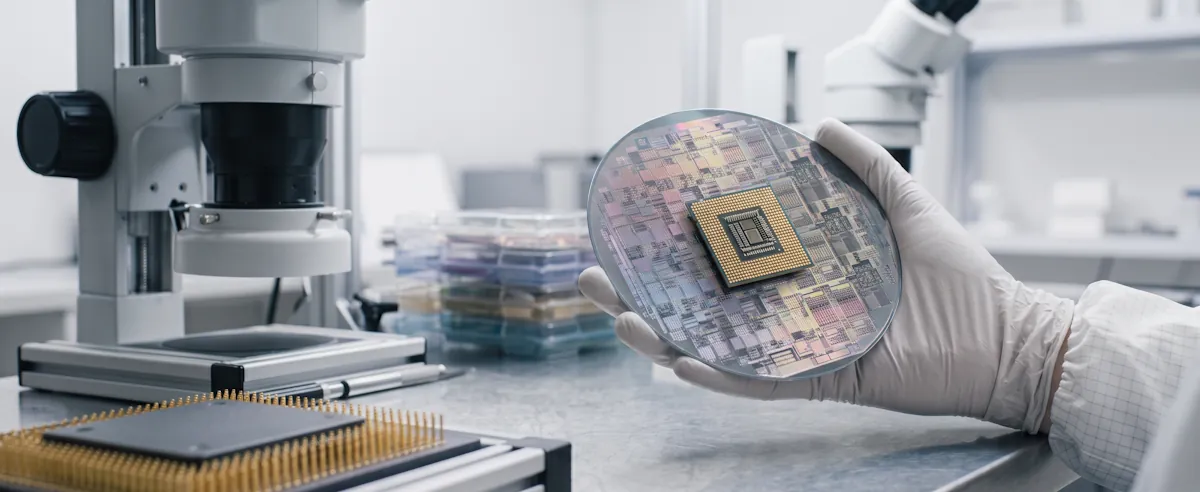
Custom AI chips are not coming to save your graphics card.
Whenever a tech giant announces custom silicon, whether it’s OpenAI building an inference chip, Meta designing MTIA, or Amazon deploying Trainium, the same hope pops up: dedicated AI chips will siphon off enterprise demand, free up fab capacity, and make desktop gaming GPUs affordable again.
It won’t, because Google’s TPU, Amazon’s Trainium, Microsoft’s Maia, Meta’s MTIA, and OpenAI’s Jalapeño are datacenter accelerators built for server racks to train frontier models and serve cloud APIs. They compete with Nvidia’s datacenter GPUs like the H100 and Blackwell B200, not the GeForce RTX or Radeon in your gaming PC. That competition pushes consumer prices higher. These custom chips use the same fabrication lines and memory supply chains as consumer graphics cards. As more tech giants design their own silicon, the line for factory time gets longer, more crowded, and more expensive.
What these chips are built for
To see why custom AI silicon won’t fix consumer prices, look at the silicon itself. Modern workloads split across four hardware categories:
| Chip Type | Primary Role | Key Silicon Features | Where It Lives | Wafer / Memory Bottleneck |
|---|---|---|---|---|
| CPU | Serial, branch-heavy control flow | Large caches, branch predictors, out-of-order execution ALUs | Everywhere | Standard fab nodes + DDR4/DDR5 |
| Gaming GPU | 3D rasterization, ray tracing, video output | Shader cores, RT cores, TMUs, display engines, video codecs | Consumer PCs & laptops | Leading TSMC nodes + GDDR7 |
| Consumer NPU | Low-power background inference (voice, camera) | Small matrix engines (10–45 TOPS) | Laptops & phones | Consumer SoC budget (LPDDR5) |
| Datacenter ASIC | Matrix multiplication & attention at scale | Massive systolic tensor arrays, high-speed interconnects | Cloud server racks | Leading TSMC nodes + CoWoS + HBM |
CPUs: the branchy control-flow backbone
CPUs do work akin to their name, the “central processing unit”. They handle serial control flow, unpredictable conditionals, branch prediction, and varied instruction sets running in sequence. Intel and AMD sit squarely in this arena, though Qualcomm and others have been making waves for years outside the x86 ecosystem.
Hyperscalers also design server CPUs like Amazon’s Graviton and Google’s Axion, but those compete with Intel and AMD for datacenter hosting, not desktop computing. That’s a separate market from the AI accelerator fight.
Gaming GPUs: general-purpose graphics engines
A gaming GPU carries hardware for every job needed to render a “pretty picture on the screen”: rasterization pipelines that turn geometry into pixels, ray-tracing cores, texture mapping units, video encode and decode blocks, display controllers, and legacy format support going back decades. All of that costs die area and power, whether a given frame uses it or not.
That massive parallelism is also why GPUs hijacked workloads they were never originally designed for, first cryptocurrency mining and then deep learning. A high-end CPU is built for serial speed, using 8 to 24 complex cores sipping data from DDR5 system memory at around 60 to 90 GB/s. A GPU, by contrast, packs thousands of simpler compute cores tied to ultra-wide memory buses pumping 1,000 to 1,800 GB/s (1.0 to 1.8 TB/s) of VRAM throughput. When crypto mining (like Ethereum’s proof-of-work) and neural networks (massive matrix multiplications) emerged, both boiled down to running the same repetitive math across millions of data points at once. A CPU processes data in a fast, narrow pipe; a GPU moves it through a massive firehose.
NPUs: low-power edge accelerators
The NPU in your laptop or phone belongs here because marketing often lumps it in as an “AI chip” and blurs the categories.
A SoC (System-on-a-Chip) integrates all the essential computing pieces, CPU, GPU, memory controllers, system cache, and security, onto a single silicon die, like Apple’s M-series, Qualcomm’s Snapdragon, or Intel’s Core Ultra. Built right into that package is the NPU, measured in TOPS (Trillion Operations Per Second). TOPS measures raw INT8 (8-bit integer) math throughput, shorthand for how many simple calculations the accelerator can perform per second.
Apple’s Neural Engine, Qualcomm’s Hexagon, and the NPU blocks on “Copilot+ PC” spec sheets are small, low-power blocks integrated onto consumer SoCs. At roughly 10 to 45 TOPS and under 15 watts, they handle local transcription, background blur and photo effects (for me, accidentally having my finger over the lens), and models under 3B parameters. They lack the memory bandwidth and capacity to run 30B+ reasoning models or render 3D games. Because they draw from consumer laptop and phone SoC budgets, not datacenter wafer allocations, they have no effect on desktop GPU pricing.
Datacenter ASICs: hardwired matrix engines
An inference ASIC throws almost all of that flexibility away for optimized, single-task efficiency. Google’s TPU, Amazon’s Trainium, and OpenAI’s Jalapeño are wired for the narrow set of operations a transformer runs: dense matrix multiplication, attention, and basic activations to handle massively parallel linear algebra across large batches.
The fundamental architectural difference comes down to focus: CPUs are built for unpredictable, forked logic; GPUs are multimodal workhorses juggling 3D rendering and parallel compute; and ASICs are hardwired to do one specific math operation exceptionally well.
Conceptually, that difference looks like this:
// CPU: unpredictable branching, deep serial control flow
foreach instruction:
    if (cache_miss) read_system_ram(...)
    branch = predict_jump(...)
    execute_serial_logic(branch)

// GPU: multimodal, general-purpose parallel graphics & compute
foreach thread:
    if (surface_needs_texture) sample_texture(...)
    if (pixel_visible)        blend_and_shade(...)
    else                      discard()
    write_framebuffer(result)

// Inference ASIC: one operation, repeated at scale, zero branching
foreach tile of activations:
    accumulate = matrix_multiply(weights, activations)
    output     = activation_fn(accumulate)
Where a GPU must carry hardware for multiple modes of operation to handle whatever a game engine throws at it, the ASIC runs the exact same matrix loop every single clock cycle. It never needs to rasterize a polygon, sample a texture, or resolve a complex branch, so none of that graphics silicon exists on the die.
Custom silicon also carries a huge one-time engineering cost that only pays off at massive, stable volume:
- Google has run this play since 2015, when the first TPU went into production for early neural-net workloads years before transformers became standard.
- Amazon has deployed nearly 500,000 Trainium2 chips in a single cluster purpose-built for Anthropic’s workloads.
- Microsoft & Meta continue ramping Maia and MTIA across internal datacenters.
- OpenAI unveiled Jalapeño with Broadcom in June 2026 for volume deployment by year-end.
- Anthropic is exploring custom ASIC manufacturing with Samsung Foundry on its 2nm process, alongside its reliance on AWS Trainium, Google TPUs, and Nvidia.
The fab and memory squeeze
Custom AI chips are technically distinct from other processing chips, but they still make graphics cards more expensive because they pull from the same upstream supply chain.
In fiscal 2026, Nvidia’s Data Center segment generated $193.7 billion, close to 90% of its $215.9 billion in total revenue. Gaming brought in $16.0 billion, about 7%. When factory capacity is tight, it is not hard to see which line gets priority.
Why is there a semiconductor bottleneck?
Chip shortages are not about a lack of raw silicon, which is abundant. The bottleneck is the complexity of leading-edge fabrication and packaging:
- The photolithography monopoly: Printing at 3nm and 2nm requires Extreme Ultraviolet (EUV) machines made only by ASML in the Netherlands. Each costs over $200 million, contains hundreds of thousands of precision parts from suppliers like Zeiss, and takes months to assemble and calibrate. Fabs cannot add more on short notice.
- Advanced packaging (CoWoS): Modern AI accelerators need Chip-on-Wafer-on-Substrate packaging to bond compute dies to High Bandwidth Memory with microscopic tolerances. TSMC’s CoWoS lines ran about 20% short of global demand through 2026.
- Geographical concentration: Nearly 90% of leading-edge sub-5nm fabrication and advanced packaging sits in Taiwan, mainly TSMC’s facilities in Hsinchu and Tainan. Expansion like TSMC Fab 21 in Arizona is underway, but bringing high-yield leading nodes and packaging ecosystems online takes years.
The supply chain is not FIFO
Silicon allocation works like an auction for the highest bidder.
Nvidia, Microsoft, Google, Amazon, and Meta don’t wait in line. They prepay tens of billions to lock down TSMC fab lines and HBM production years in advance. A single server tray of Blackwell GPUs or custom ASICs sells for hundreds of thousands of dollars at margins above 75%. A consumer desktop GPU die returns a fraction of that.
When wafer capacity is maxed out, Nvidia and AMD choose where to send a 300mm wafer, to high-margin enterprise accelerators or to consumer GeForce and Radeon dies, and enterprise wins because the margins are so much higher.
Breaching the $5,090 mark
A consumer RTX card skips CoWoS and HBM, but it still needs leading TSMC wafers and GDDR7.
A few months ago the RTX 5090 became a #sadmeme for fear that the price would reach the model number. In the last few days that meme became reality as the card hit $5,100 at several US retailers, well above its $1,999 MSRP, as reported by Videocardz. That price is hard to comprehend for a single component in a computer. Mid-range cards have jumped too, with the RTX 5070 and 5060 Ti up 30% to 40% in weeks, so the squeeze isn’t limited to the 5090.
Both TSMC wafers and GDDR7 are getting more expensive as they compete for resources. TSMC raised prices across leading nodes, while $20 GDDR7 modules squeezed board partners.
MSI’s general manager warned earlier in the year that “this year is the most severe year since the company was founded”, estimating a 20% GPU supply shortfall.
The reality for gamers and PC builders
The idea that custom AI silicon will save the consumer GPU market misunderstands how chips are made.
Part of the confusion comes from muscle memory. During the crypto mining booms, gamers watched viral footage of warehouses and basements packed with wire racks of retail GeForce GTX 1060s and RTX 3080s bought directly off store shelves. In that era, gamers lost out because miners were physically buying up downstream consumer inventory.
The AI squeeze is completely different. Enterprise AI datacenters aren’t hoarding stacks of consumer RTX 5090s from Newegg. A retail PCIe card lacks the NVLink interconnect bandwidth, 192GB+ HBM3e memory pools, and liquid-cooled SXM form factors needed to train frontier models. Instead, the AI boom steals your graphics card before it is even manufactured, consuming the upstream foundry capacity, the scarce TSMC leading-edge wafers and GDDR/HBM packaging lines, at the factory level.
TPUs, Trainiums, and Jalapeños don’t substitute for consumer graphics cards and they don’t relieve foundry pressure. Every new custom design adds another well-funded enterprise buyer competing for the same leading-edge fab and memory supply.
For PC builders, gamers, and homelabbers, that leaves a clear picture:
- Hardware relief isn’t coming from foundries. As long as enterprise AI pays huge margins, consumer graphics dies stay the lower-priority output of shared lines.
- The upgrade cycle has changed. If you’re waiting for desktop GPUs to return to old MSRPs, you may be playing backlog titles on your current card for a while.
- Efficiency is the upgrade. The real gains for local computing come from software that lets old hardware run modern workloads: dynamic quantization, smarter architectures, and leaner runtimes.