Capping In-Flight Change
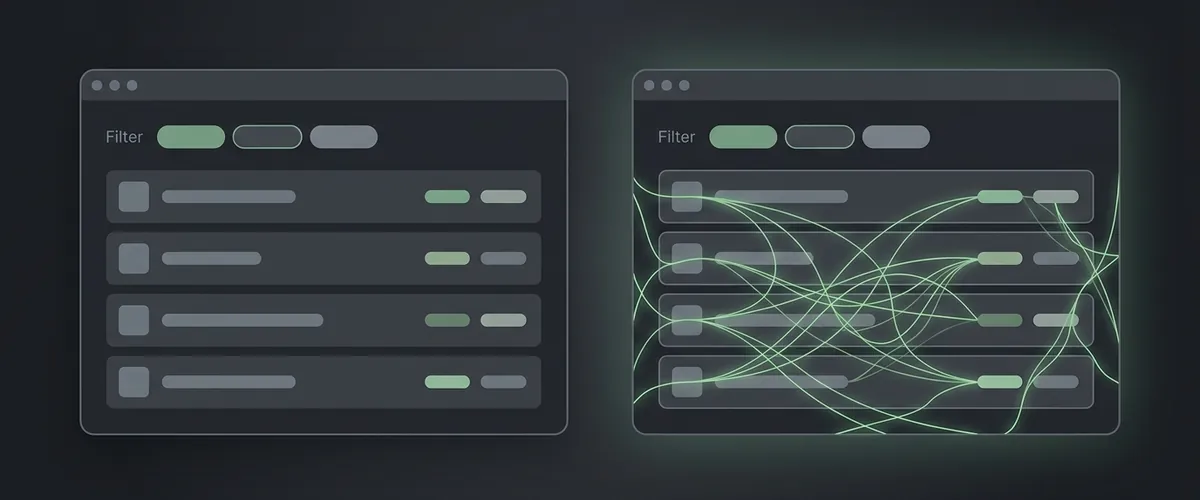
A team can only absorb so much change at once. Organizational WIP limits make that capacity real.

Picture a product team in the second week of a quarter. So far this quarter, they’ve been handed a new planning cadence, a revised on-call rotation, a changed launch checklist, and a request to start using an AI assistant in their daily work. Each change makes sense, though each came out of a different meeting with its own owner and its own deadline.
Ask the lead how the team is doing and you’ll hear “it’s fine.” Ask which of the changes is working and you’ll get a nervous (or blank) stare. That pause is a capacity question because with so many changes at once, they’re probably not sure of the answer.
The Limit Is People
Nan Yu of OpenAI put it plainly in the Lenny & Friends Summit talks posted September 29: “The biggest constraint is honestly people’s understanding and ability to absorb what you’re giving them.” That’s a frontier-lab person naming the limit as people, not an AI model or tool.
No one’s surprised by that, but what’s less common is treating that limit as an engineering constraint. A Jellyfish survey of 636 full-time engineering professionals, fielded in March 2026, reported that “Only 10% of respondents reported strong enablement and high adoption.” It’s a single vendor survey, so read it as a signal, not a benchmark, but interesting nonetheless. Ninety percent of teams are struggling with the gap between rolling tools out and actually absorbing them.
I’ve spent a fair amount of time on the politics of adoption over the past year. Leading Both Ends of the Adoption Curve looked at who pushes back and why. Usage Can Be Mandated, Adoption Must Be Earned argued that a mandate buys usage and nothing more. Cognitive Load Kills Products covered the load a product puts on the person using it, and The Calmer Front Door looked at the same problem from the interface side.
Today, let’s look at the team on the receiving end of all of it. A team can only take in so much operational change at once. That’s a biological constraint, and your rollout plans need to budget for it just like headcount or server capacity.
Running Change with a WIP Limit
Every engineering lead understands Work In Progress (WIP) limits on a sprint board. Nobody lets forty tickets sit in “In Progress” simultaneously because multitasking collapses throughput into cycle-time sludge. Yet when leadership rolls out process changes, we act like the organization’s absorption pipeline has infinite bandwidth.
I want to be clear here. While much of this is in the context of AI and AI tooling due to how rapidly it’s changing the landscape in orgranizations, it’s not limited to just AI.
I’ve seen the overhead of a new “let’s plan weekly luncheons” absolutely crush a team before too.
Making capacity concrete comes down to three operational disciplines.
Put a hard cap on changes in flight. Pick how many organizational changes a team can actively carry at the same time, and write the number where everyone can see it. Two is usually the right ceiling. A cap nobody enforces is just a wish, so it needs a clear owner: the person who controls what enters the team’s operational queue.
Name what stops before the new thing starts. Every rollout announcement details what’s being introduced. Almost none specify what is being turned off or paused to make room. If you add a new daily AI workflow, something else on the calendar has to yield. If nothing can stop, that’s not leadership; it’s just stacking plates until something breaks.
Schedule the learning on real work before launch. Enablement delivered as a reactive webinar after frustrations boil over is damage control, not training. Put protected blocks on the calendar before launch—two full afternoons where no sprint work is due, where the team applies the change directly to real work rather than a toy demo.
What Intentional Room Looks Like
Suppose a team is about to adopt a new tool that replaces a planning review process they’ve run for years. Before rollout day, the engineering lead cancels that review for two full weeks and communicates it clearly: “We’re pausing this on purpose so you have the headspace to learn the new tool on actual production work.” The tool will still have rough edges, but the friction becomes actionable feedback instead of burnout.
That rollout succeeds because leadership treated change as a pipeline with finite throughput. Later this week, I’ll examine this dynamic from the individual role level, specifically what happens when a product manager is handed technical AI evaluation duties without anything coming off the list.
A team can only take in so much change at once. Capping the pipeline isn’t slowing down; it’s the only way to make sure the changes you care about actually stick.
Before the next initiative launches, how many changes is that team already juggling—and what are you prepared to pause?